



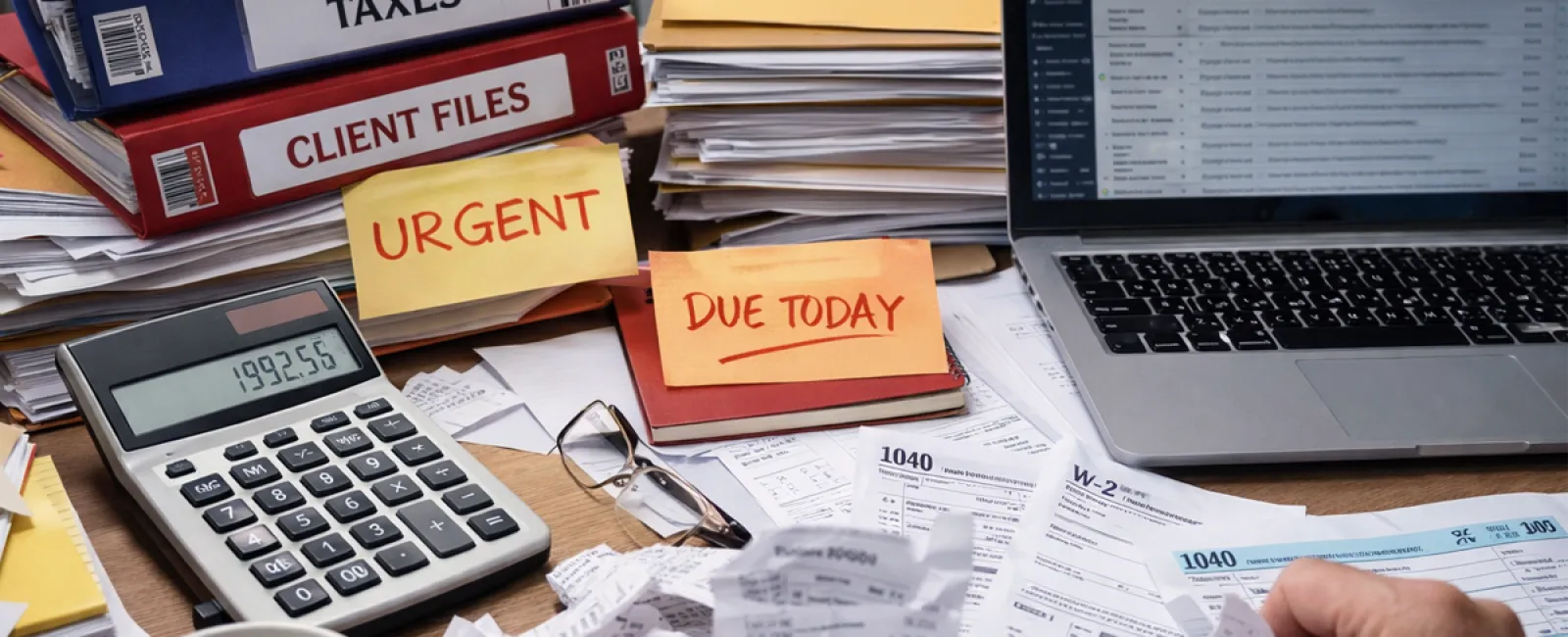
March marks the peak of tax season chaos.
Your accountant is overwhelmed. Your bookkeeper is racing against time. Deadlines are closing in fast, and urgent emails flood the inbox relentlessly.
Everyone is focused on just making it through this hectic month.
This stressful reality is all too familiar.
But it's not lost on cybercriminals.
Security experts consistently report a sharp surge in phishing attacks during tax season, with March experiencing nearly a 28% rise in tax-related scam emails compared to quieter periods. These fraudulent emails are subtle — crafted to mimic routine business communications precisely when distractions are at their highest.
This surge is deliberate.
This is calculated timing.
Here's what lies ahead, along with four straightforward strategies to shield your business from becoming a victim.
Pressure on the Entire Supply Chain
What many overlook:
Cybercriminals don't just go after accounting firms.
They target the disruption surrounding these businesses.
When tax season hits:
- Clients hurriedly send sensitive documents without usual safeguards
- Employees skip normal verification steps to cope with workload
- Requests like "Just send me the file" replace cautious communication
- Security checks fall by the wayside due to overwhelming pressure
The entire process speeds up dramatically.
And in haste, errors become inevitable.
Hackers exploit frantic, overloaded companies — not those operating calmly and methodically.
March is the ultimate high-risk month.
Recognizing the Real Attack Patterns
This scenario isn't fiction.
Every phishing email looks strikingly ordinary among your regular inbox traffic.
- An email from "your accountant" requesting a re-send of W-2s due to alleged transmission issues
- A vendor's notification about updated bank details demanding immediate action
- A DocuSign request urging you to sign a tax document "today"
- An urgent message from "your CEO," supposedly traveling and needing urgent support
None of these raise red flags instantly.
They appear as typical March business communications.
Which makes them dangerously effective.
Why Busy Professionals Get Trapped
This is not about negligence.
It's about human nature.
When faced with overflowing inboxes and imminent deadlines, people tend to skim rather than scrutinize. They make assumptions and react hastily.
Scammers capitalize on this behavior.
Their emails are crafted for individuals moving too quickly to notice subtle inconsistencies. They don't need recklessness — just your busyness.
And in March, everyone is undeniably busy.
Four Practical Steps to Avoid Being an Easy Mark
The advantage: you don't need high-tech tools or a dedicated security team to cut your risk.
All it takes is adopting a few deliberate habits during the busiest times.
1. Confirm payment changes by phone
If you receive an email about vendor bank details changing, never reply directly.
Instead, call a trusted number you already have on file to verify verbally.
This simple step prevents many costly scams.
2. Take your time with sensitive data requests
Urgency should prompt caution, not haste.
If someone demands immediate access to W-2s, tax records, or financial files, pause and verify.
Legitimate senders won't object to a short delay. Scammers will.
3. Validate "urgent" requests through another channel
If an email stresses urgency, confirm via a separate method.
A quick call, SMS, or chat can stop dangerous mistakes.
True emergencies withstand a brief verification; fake ones dissolve.
4. Alert your team about scam risks
This week, remind your staff that tax season is peak scam season.
Encourage slowing down, double-checking, and raising questions if something seems off.
This small mindset shift minimizes sizable risks later.
Key Takeaway
Tax season is stressful enough — don't add falling prey to scams.
These attacks aren't genius hacks; they're just perfectly timed.
They rely on rushing.
They depend on assumptions.
They exploit the rush everyone feels in March.
No extensive system overhaul is needed to avoid becoming a target.
Simply slowing down and verifying urgent messages can be your strongest defense.
Often, that's all it takes.
Quick Sanity Check for the Busy Season
Your business might already practice strong security habits — which is excellent.
But if tax season pushes your team to act reactively or if you're uncertain about how your employees handle urgent requests under pressure, consider a quick, free 15-Minute Discovery Call to evaluate your approach.
No gimmicks. No stress. Just an honest review to spot small habit changes that could save you big headaches during the peak season.
If this doesn't feel like your business, please share it with someone who might benefit.
Click here or give us a call at (619) 349-5850 to schedule your free 15-Minute Discovery Call.